Deploying an Application with MongoDB
In this example, we have an application connected to a MongoDB database hosted on MongoDB Atlas.
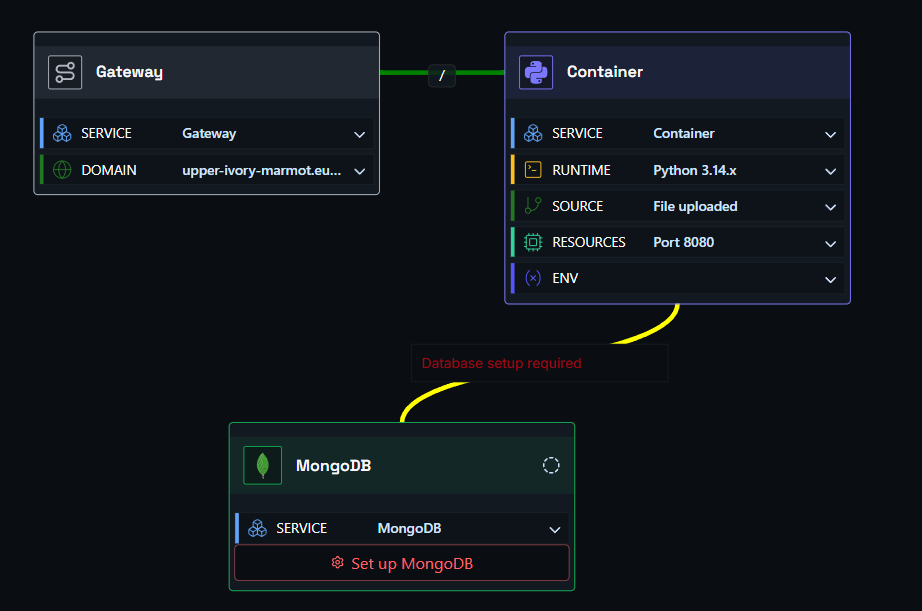
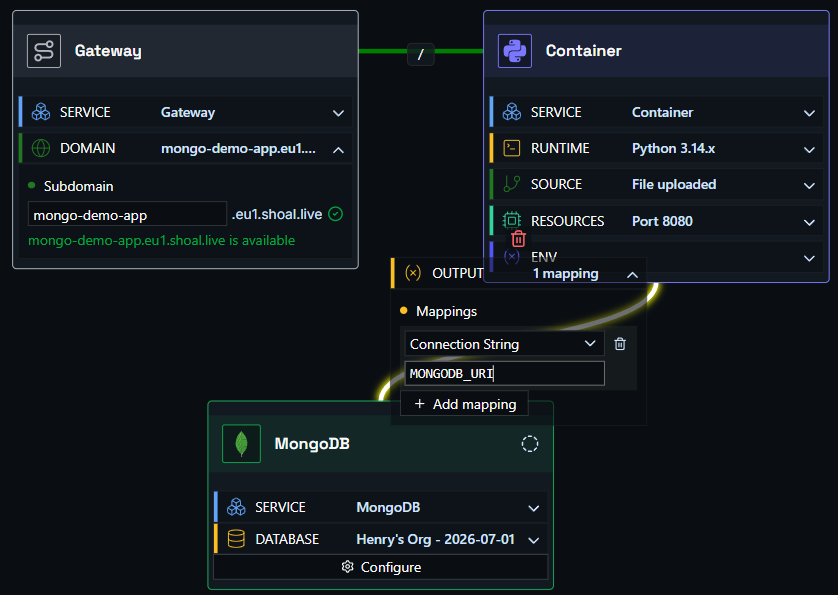
You need three components: a container node, a gateway node, and a MongoDB node.
- Container node - links to your source code, runs and scales your container, and holds app environment variables.
- Gateway node - where you set the DNS name for your app.
- MongoDB node - configures your MongoDB connection details and provides the output value you map into your container.
Hit deploy, and it just works.
Step One
Drag a container node, a gateway node, and a MongoDB node onto the canvas, then link them together.
Step Two
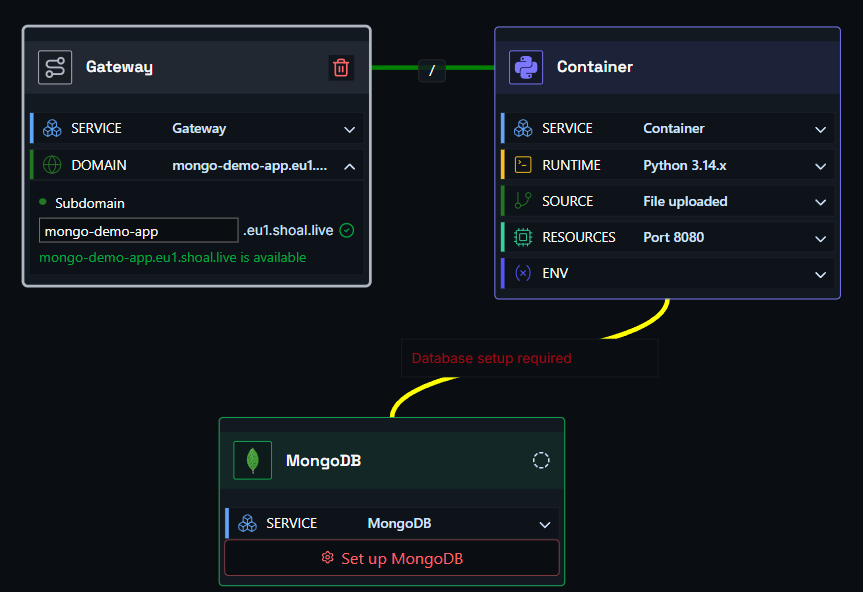
Click the gateway node to open it, expand the Domain section, and enter the URL name you want. For example, entering shopping-test will make your app available at shopping-test.eu1.shoal.live. You can also point a custom domain at this address.
Step Three
Click the container node to open it, expand the Source section, and set up your source - either a GitHub repo or a file upload. If your project includes a Dockerfile, Shoal builds from it; otherwise Shoal auto-detects your stack and builds it for you.
Open the MongoDB node and click Set up MongoDB (or Configure / Edit if it's already initialized).
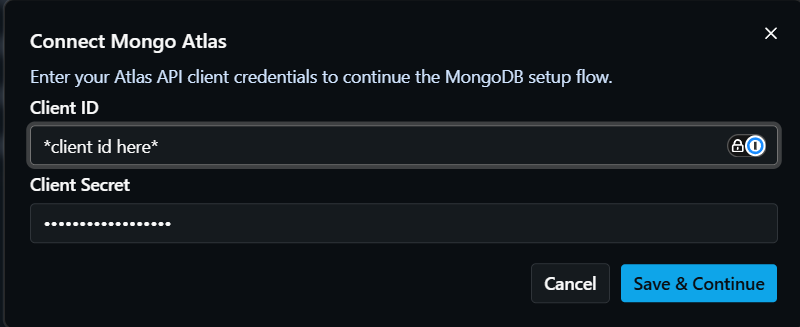
If Atlas credentials are not saved for the space yet, Shoal prompts you with Connect Mongo Atlas first, where you enter your Atlas Client ID and Client Secret. If credentials are already saved, Shoal skips this step and opens setup directly.
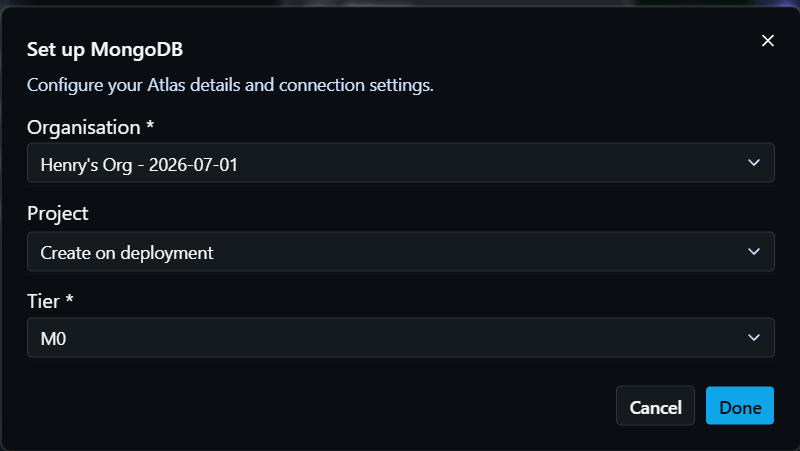
In the setup dialog, choose your Organisation, then either select an existing Project and Cluster or choose Create on deployment where needed. If you're creating a new cluster, choose a Tier before clicking Done.
Step Four
Map the MongoDB output connection_string to your container environment variable, usually MONGODB_URI. You can also map username and password if your app expects separate values.
You can manage environment variables from the container node config, or from the environment settings page. See the environment variables guide for more detail.
Step Five
Press Deploy. You can watch the deployment in real time via the Observability menu, or by clicking the link on the deploy button.
Done
Your app is live at the address you configured - connected to MongoDB and running in a scalable, resilient, and protected environment.